
1
Contact or call for free on 0333 358 3034

2
Talk through the details of your claim. Just so you know, we're FCA regulated.

3
Find out if you could claim & speak to a real person.

4
Secure the compensation you deserve

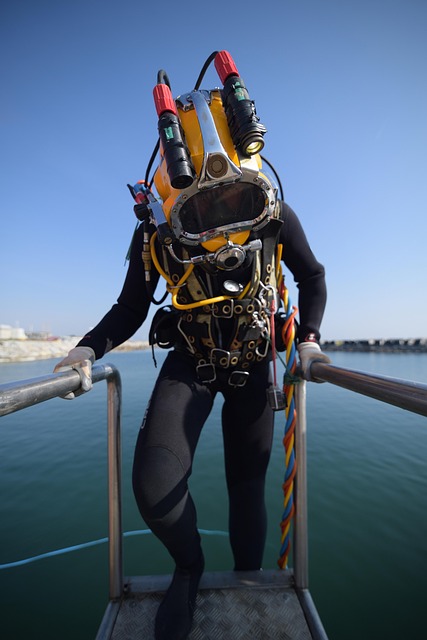
Compensation for Commercial Divers Injured at Work
Written by Tanya Waterworth, Digital Content Writer
About Our Legal Expert: This content is produced with oversight by Michael Jefferies, Managing Director who has over 30 years’ legal experience.
What Commercial Divers Need to Know To File a Personal Injury Claim
Compensation for commercial divers injured at work may be pursued if company or diving contractor controlling the work failed to provide safe systems. As an inherently high-risk profession, divers work under pressure, often at significant depths. They use complex breathing systems and are exposed to pressure and decompression hazards.
However, when things go wrong, injuries such as decompression sickness (often called “the bends”) or other compression‐related injuries may result. If you are a commercial diver who has suffered such injuries while working, you may be entitled to file a personal injury claim for compensation.
What Are Compression-Related Injuries in Diving Work?
Compression-related injuries are caused by changes in pressure during diving, or from failure of systems controlling pressure. Key examples include:4
- Decompression Sickness (DCS): When dissolved gases (mostly nitrogen) form bubbles in tissues or bloodstream as pressure decreases too quickly.
- Barotrauma: Damage caused by pressure differences (e.g. ear or sinus damage, lung over‐expansion injury).
- Nitrogen Narcosis / Saturation issues: Over‐saturation of inert gas under pressure; when coming back to surface, inability to slow pressure change safely.
- Other long-term effects: Including chronic joint/nerve damage, inner ear problems, chronic pain or mobility issues, psychological consequences.
These can result from system failures, employer negligence such as faulty equipment, inadequate planning, insufficient safety measures, or inadequate training/medical fitness.
Legal & Regulatory Framework for Commercial Divers
Commercial diving is regulated under the Diving at Work Regulations 1997 (DWR). These regulations place a duty on employers, diving contractors, supervisors, and divers themselves to ensure safety. Key legal obligations include:
- Ensuring that divers are competent and hold approved qualifications.
- Ensuring medical fitness to dive is assessed.
- Maintaining daily diving records, safety plans, supervision, and ensuring compliance with best practices.
A breach of these duties can form the basis for a negligence or employers’ liability claim.
When Can a Commercial Diver File a Personal Injury Claim?
A commercial diver injured at work may file a claim when certain conditions are met:
Duty of care was owed: The employer (or contractor) must have owed you a legal duty to ensure safe working conditions (under DWR, Health & Safety legislation). If that duty was breached, you must show it directly contributed to your injury.
Negligence or breach: Something went wrong for example equipment failure, lack of proper supervision, inadequate planning of decompression schedules, lack of medical checks, etc.
Injury must be causally linked: You must prove the injury was caused (wholly or partly) by the breach. For compression injuries, medical evidence is essential: doctors aware of diving medicine, expert witnesses.
Awareness / date of knowledge: Sometimes injuries – especially decompression sickness or latent effects – may not show immediately. The law allows for claims from the “date of knowledge” if the injury or its cause was not evident immediately.
Time limit / limitation period: You must bring the claim within the legal timeframe. For personal injury in England & Wales, that is generally three years from either:
- the date of the accident or injury, or
- the date you knew – or should reasonably have known – about the injury and its cause.
There are exceptions, for example if you are under 18, the time limit starts when you turn 18.
What Kinds of Compensation Could You Recover?
If your claim succeeds, compensation (“damages”) usually covers two categories:
General Damages: These are for pain, suffering, loss of amenity, permanent disability, disfigurement, or psychological injury. For instance, ongoing joint pain or neurological deficits caused by decompression sickness.
Special Damages (Economic Losses): These are financial losses, which may include:
Medical costs (treatment, physiotherapy, rehabilitation, ongoing care).
Loss of earnings (past and future), including if you can no longer work as a commercial diver.
Loss of career prospects (if your injury restricts your diving work in future).
Costs of adapting homes or vehicles.
Travel and related expenses for treatment.
Examples of Diving Claims
- One case involved a Royal Navy diver with a non-freezing cold injury who received a record settlement of £950,000. The case included loss of earnings, loss of career prospects, medical and care costs, showing how serious non-diving specific injuries can be when occupation and future work are impacted.
- Another example: a scuba diving school where a participant suffered decompression injury, vertigo, ear damage, due to negligence of the school and instructor. Although this was not strictly commercial diving work, it illustrates how liability and compensation are assessed. The client was awarded about £10,000.
These show both ends of the spectrum, a major, career‐ending injury vs more modest but legitimate claims.
Steps to Take If You Think You Have a Claim
If you believe you’ve suffered a compression-related injury, or decompression sickness at work, here’s a guide on what to do next:
Seek immediate medical treatment and keep clear records of diagnosis, treatment, symptoms over time.
Document everything: dive logs, equipment maintenance records, copies of safety plans, communications with employer/contractor, witness accounts.
Report the incident through official workplace channels and follow internal health & safety incident procedures.
Get legal advice early from a solicitor specialising in personal injury, work injury, diving-related claims. They can give guidance on whether you have a valid claim.
Gather expert evidence: medical experts (diving medicine), possibly engineers or technical diving safety experts to show breach of equipment / protocol. Your solicitor may be able to help you with this.
How Much Compensation Could You Receive?
It’s very fact dependent. Key factors to consider are severity of injury, permanence, impact on earnings, medical prognosis, and how directly the employer’s breach contributed all matter.
Your solicitor will be able to give you an estimate regarding your specific claim.
Why Early Action Is Critical
- Evidence (dive logs, maintenance records, witness testimony) can degrade or be lost over time.
- Medical diagnosis better soon, ideally documented by specialists, so experts can link injury to diving / breaches.
- Legal costs and funding: the earlier you engage solicitors, the better your chances of obtaining strong evidence, arranging expert reports, and avoiding being time-barred.
FAQs for Commercial Divers Injured at Work
1. Can commercial divers claim compensation for decompression sickness?
Yes. If decompression sickness (the bends) occurred because your employer or diving contractor failed to follow safety regulations, you may be eligible to claim. This may include improper decompression schedules, faulty equipment, or inadequate supervision.
Employers have a duty of care under the Diving at Work Regulations 1997 and Health and Safety at Work Act 1974 to protect divers from foreseeable harm.
2. What if my injury developed over time, not from a single dive?
Many compression-related injuries have delayed symptoms. You may still be able to claim compensation if you only later realised the connection between your symptoms and your work. In such cases, the three-year limit begins from the date when you first became aware of the link between your injury and your diving activities.
3. Do I need medical evidence to make a diving injury claim?
Yes. Medical evidence is crucial in diving-related personal injury claims. A diving medicine specialist can confirm that your injury was caused by decompression or pressure-related factors.
4. Who is responsible for my safety while diving for work?
The diving contractor or employer has the primary responsibility for ensuring diver safety. They must:
- Plan dives properly.
- Provide safe and well-maintained equipment.
- Ensure medical checks are up to date.
- Employ competent supervisors and support personnel.
Failure in any of these duties can amount to negligence.
5. What if my employer denies responsibility?
That’s common. Employers and insurers often deny liability initially. Your solicitor can investigate, gather expert reports, witness statements, and technical evidence to establish fault. Many claims settle before court once strong evidence is presented.
Contact Our Team Today
If you’re a diver or represent one and suspect you have been harmed due to negligence or unsafe conditions, acting quickly gives you the best chance of maximising compensation and ensuring you receive support for medical, financial, and personal recovery.
We partner with highly experienced solicitors who offer No Win, No Fee claims. To discuss your potential claim in confidence, contact our friendly team at Jefferies Claims on 0333 358 3034 or complete our online contact form to arrange your free, no-obligation consultation.