
1
Contact or call for free on 0333 358 3034

2
Talk through the details of your claim. Just so you know, we're FCA regulated.

3
Find out if you could claim & speak to a real person.

4
Secure the compensation you deserve

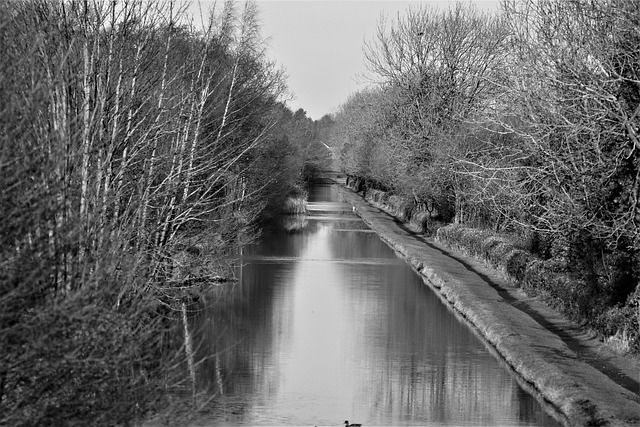
Canal Towpath Accidents: What Counts As Negligence?
Written by Tanya Waterworth, Digital Content Writer
About Our Legal Expert: This content is produced with oversight by Michael Jefferies, Managing Director who has over 30 years’ legal experience.
How to Claim Compensation After a Canal Towpath Accident in England and Wales
Canal towpaths are popular for walking, cycling, running and commuting, but when it comes to canal towpath accidents: what counts as negligence? Towpaths are not risk-free, they may have uneven surfaces, hidden edges, poor lighting and inadequate maintenance can all turn a simple towpath journey into a serious accident.
If you’ve been injured on a canal towpath, your first question should be: was this just bad luck or was someone negligent? In England and Wales, you can claim compensation if your injury was caused by a breach of duty by the organisation responsible for the towpath. The route may not be perfect, but it is expected to be reasonably safe for the public.
If you’ve been injured in an accident on a canal towpath which wasn’t your fault, you may be eligible to claim personal injury compensation. Below are the most asked questions and answers about what to do next.
What is a canal towpath accident claim?
You can make a canal towpath accident claim if a hazard on or beside the towpath injures you and the responsible party should have dealt with it.
The following organisations often manage towpaths:
- the Canal & River Trust
- local councils (in certain areas)
- private landowners or management companies (occasionally)
- contractors carrying out works on the towpath
The key point is this: a towpath manager is not expected to make the route perfect, but they are expected to take reasonable steps to keep it safe.
What may count as negligence on a canal towpath?
Negligence is not simply the presence of a hazard. To succeed in a claim, you typically will have to be able to show that:
- A duty of care existed
- The duty was breached
- The breach caused your injury
- You suffered loss (pain, financial loss, treatment costs etc.)
On canal towpaths, negligence often comes down to maintenance, inspection, and warning.
1. Poor towpath surface maintenance
This is one of the most common causes of towpath injury claims. Examples include:
- potholes or deep depressions
- loose gravel or broken surfacing
- collapsed edges or erosion
- raised slabs or uneven paving near bridges and access points
- tree roots pushing up the surface
A defect is more likely to be considered negligent if the responsible party allowed a severe, obvious hazard to remain without repairing it for a reasonable period
2. Dangerous towpath edge conditions
Towpaths often run directly beside the canal with little or no barrier. That doesn’t automatically mean the route is unsafe. This is because towpaths are naturally “open” environments. However, negligence can arise where the risk is made worse by preventable conditions such as:
- crumbling or collapsing towpath edges
- missing or damaged edging where there should reasonably be one
- steep drop-offs made worse by poor surfacing or inadequate drainage
- unmarked hazards near locks, bridges or mooring points
If an edge collapses beneath someone or gives way due to erosion, the issue is usually not the lack of a fence, but whether the towpath manager failed to maintain the structure properly.
3. Poor lighting in high-use areas
Many towpaths are unlit by nature. But negligence may arise where:
- lighting is provided but not maintained
- lighting has been removed or left broken for long periods
- the towpath is a known commuter route where lighting is expected. This is especially near urban access points.
The legal issue is not whether the towpath is “dark”, but whether the responsible body created or tolerated an unreasonable risk.
4. Failure to manage vegetation and overgrowth
Overgrown vegetation can cause accidents in several ways:
- brambles or branches forcing users into unsafe areas
- foliage obscuring potholes or broken edges
- algae or leaf build-up making the surface slippery
- overhanging trees dropping debris
A towpath manager doesn’t need to clear every leaf. But they may be negligent if they ignore predictable seasonal risks, especially towpaths with heavy footfall.
5. Slippery surfaces caused by algae, mud or water
Slip hazards are particularly common near to:
- locks and lock gates
- mooring points
- under bridges
- sections with poor drainage
- areas where water spills onto the path
Negligence is more likely when a hazard keeps recurring and the responsible party fails to take reasonable action. It may include resurfacing, drainage repairs, cleaning, or warning signs during high-risk periods).
6. Unsafe works and temporary hazards
Towpath works can also cause of injury. Negligence may apply if:
- barriers were missing or poorly positioned
- signage was unclear or absent
- the path was left with exposed holes or uneven temporary surfaces
- equipment was left obstructing the route
- diversions were unsafe or confusing
When contractors are involved, the contractor, the towpath authority, or both can be held liable depending on the circumstances.
What does not usually count as negligence?
This matters because towpath claims can fail when the hazard is considered part of the environment.
Therefore, towpath managers are generally not liable for:
- natural unevenness that is minor and not dangerous
- obvious risks like walking too close to the canal edge
- accidents caused mainly by running, cycling too fast, or not paying attention
- temporary conditions that appeared very recently (before reasonable inspection could catch them)
- hazards that were clearly marked with warning signs and safe alternatives
What evidence helps prove negligence on a towpath?
Towpath claims often succeed or fail on evidence. Additionally, the strongest evidence is usually gathered immediately after the accident on the towpath.
Helpful evidence can includes:
- clear photos of the defect (wide shot + close-up)
- photos showing location markers (bridges, locks, signs, nearby buildings)
- measurements of pothole depth or edge collapse
- witness details (especially other walkers or cyclists)
- accident reports e.g. to the Canal River Trust or relevant council
- medical records confirming injury and symptoms
- proof of financial losses (travel costs, prescriptions, time off work)
If the hazard is repaired quickly after your accident, your photos can become the most important proof you have.
How to claim compensation after a canal towpath accident?
The claims process in England and Wales follows a fairly standard personal injury structure. But, towpath cases have their own practical challenges, such as proving who was responsible and showing the defect existed long enough.
Step 1: Get medical treatment and record symptoms
Even if you think the injury is minor, get it checked. A medical record helps link the accident to the injury on the towpath
Step 2: Report the accident
Report it to the relevant body (often the Canal & River Trust). Ask for a reference number and keep copies of any correspondence.
Step 3: Collect evidence quickly
Towpath defects can be repaired without warning. Therefore, if you can, return to the location to take better photos and measurements.
Step 4: Speak to a solicitor experienced in towpath claims
Towpath accident claims are not always straightforward. A solicitor will typically:
- identify the correct defendant
- request maintenance and inspection records
- assess whether the defect meets the legal threshold
- value your claim and gather medical evidence
We partner with solicitors experienced in public injury claims and who offer a No Win No Fee agreement (Conditional Fee Agreement), meaning you usually pay nothing upfront.
Step 5: The defendant investigates and responds
The defendant may admit liability, deny it, or argue that:
- the defect was too minor
- they had a reasonable inspection system
- the hazard appeared too recently
- you were partly responsible
This is where maintenance logs and inspection records become critical.
Step 6: Medical assessment and settlement
If your claim progresses, you’ll usually attend a medical appointment with an independent expert. Compensation is then valued based on:
- pain, suffering and loss of amenity
- time off work and lost earnings
- medical and rehabilitation costs
- travel expenses
- care and assistance (even help from family)
Many towpath claims settle without going to court, but court proceedings may be issued if liability is disputed.
Are There time limits for canal towpath injury claims?
In England and Wales, you usually have three years from the date of the accident on the canal towpath to start a personal injury claim.
There are exceptions for children and those lacking mental capacity, but for most adults, the three-year limit is strict. Starting early is strongly recommended because towpath evidence can disappear quickly.
Need Help Today?
People do not expect canal towpaths to be flawless. But the law does require responsible organisations to take reasonable steps to inspect, maintain and manage hazards.
If a towpath hazard remained unrepaired or unmarked and it injured you or a loved one, you may be entitled to compensation.
Speak to Michael Jefferies’ team today at 0333 358 3034 or complete our online contact form to arrange your initial no-obligation telephone consultation.