
1
Contact or call for free on 0333 358 3034

2
Talk through the details of your claim. Just so you know, we're FCA regulated.

3
Find out if you could claim & speak to a real person.

4
Secure the compensation you deserve

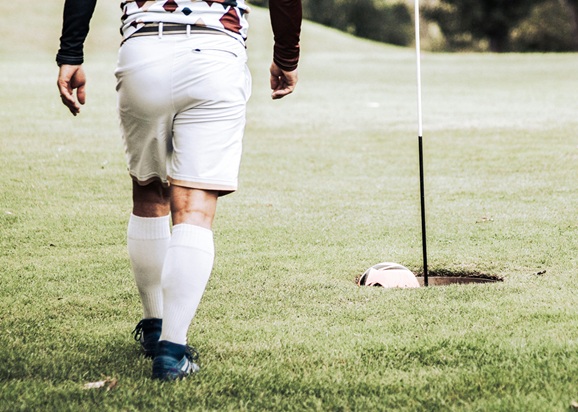
Footgolf Injury Claims
About Our Legal Expert: This content is produced with oversight by Michael Jefferies, Managing Director who has over 30 years’ legal experience.
Written by Tanya Waterworth, Digital Content Writer
Did Negligence Caused Your Footgolf Injury?
Footgolf has become one of the fastest‑growing leisure activities and while it is a relatively low risk sport, if an accident happens on a footgolf course which wasn’t your fault, you may be able to claim compensation. Footgolf is a blend of football and golf and attracts families, groups of friends and is also becoming a popular team building activity for work colleagues. It is now being played on courses across England, Wales, Scotland and N. Ireland. But like any public space area, accidents can happen. If they do, you may be entitle to claim personal injury compensation if negligence caused your injury.
Here, we explain what negligence means exactly, what injury you may or may not be able to claim for and how to get started.
What Counts as Negligence on a Footgolf Course?
Negligence occurs when the organisation responsible for the footgolf course fails to take reasonable steps to keep players safe. Footgolf venues, which may be standalone courses or part of golf clubs, leisure centres or holiday parks, owe a duty of care to everyone using their facilities. That duty falls under the Occupiers Liability Act 1957 and includes:
- Maintaining safe playing surfaces
- Managing hazards such as uneven ground, holes, debris or water
- Ensuring equipment is safe and fit for use
- Providing clear signage and warnings
- Carrying out regular inspections and risk assessments
- Responding promptly to known hazards
If the operator breaches this duty and you suffer an injury as a result, you may have grounds for a personal injury claim. The key test is whether the accident was reasonably foreseeable and preventable with proper safety measures.
Types of Injuries Which May Be Caused by Negligence on a Footgolf Course
Footgolf injuries vary widely, but we have noted that certain accidents in public places may be linked to negligent maintenance or unsafe conditions. For example:
1. Slips, Trips and Falls
These will probably be the most frequent accidents on footgolf courses. Injuries can include sprains, fractures, ligament damage, cuts and bruises or even head injuries. They may occur due to:
- Poorly maintained grass or artificial turf
- Hidden holes or divots
- Loose stones, mud or debris
- Slippery surfaces after rain without warning signs
2. Injuries Caused by Faulty Equipment
Footgolf courses sometimes provide footballs, scorecards, tees or markers. Faulty or damaged equipment may potentially lead to a claim for compensation, such as over‑inflated balls causing hand injuries or broken markers causing cuts.
3. Injuries Linked to Inadequate Supervision
Organised events, tournaments or corporate sessions may require staff supervision. If staff fail to manage unsafe behaviour or overcrowding, resulting injuries may be considered negligence.
4. Poorly Maintained Surrounding Areas
Accidents may sometimes happen off the main course and if you can show that these areas were unsafe, the operator may be responsible. Such areas can include:
- Car parks
- Pathways
- Clubhouse entrances
- Steps or slopes leading to the course
Top Tip: The most common footgolf injuries include ankle sprains, knee injuries, slips, trips and falls. Uneven ground, hidden hazards and poorly maintained pathways can significantly increase the risk of injury.
What Injuries Would Not Be Considered Negligence?
Not every footgolf injury will lead to a compensation claim as some accidents are simply part of the sport. Here are some examples:
Injuries from Normal Gameplay
If you twist your ankle while kicking the ball or slip because of your own movement, this is usually not considered negligence.
Weather‑Related Risks
Wet grass, mud or wind can affect playing conditions. If the course was reasonably maintained and weather hazards were unavoidable, the operator may not be liable.
Injuries Caused by Other Players’ Normal Actions
Being accidentally struck by a ball during standard play is usually considered an inherent risk of footgolf and would not be negligence.
Ignoring Safety Instructions
If you were injured after ignoring signage, warnings or staff instructions, liability may be reduced or removed.
Who Would Be Liable for a Footgolf Injury?
Liability depends on where the accident happened and who controlled the environment. Potentially responsible parties include:
1. The Footgolf Course Operator
This is the most common defendant. They are responsible for maintaining safe conditions and managing risks.
2. The Landowner
If the course is part of a larger venue, such as a golf club, leisure centre or holiday park, it’s possible that the landowner may share liability.
3. Event Organisers
If your injury occurred during a tournament, charity event or corporate day, the organiser may be responsible for supervision and safety.
4. Contractors
Ground maintenance companies or equipment suppliers may be liable if their negligence contributed to the accident.
Top Tip: A footgolf venue may be liable if it knew, or should have known, about a dangerous hazard and failed to repair it, remove it or provide adequate warning to players.
Why You Should Use a Personal Injury Solicitor
Footgolf injury claims fall under public liability law, which can be complex. A specialist solicitor strengthens your case by:
- Gathering evidence such as photos, witness statements and maintenance records
- Identifying the correct defendant
- Proving negligence and causation
- Arranging an independent medical assessment
- Valuing your claim accurately
- Negotiating compensation
- Handling all communication with insurers
Top Tip: We partner with solicitors who offer a free, initial consultation to assess whether you have a valid claim. They also offer No Win, No Fee agreements which means you pay nothing upfront and nothing if the claim is unsuccessful.
FAQs: How to Start Your Footgolf Injury Claim
How do I start a personal injury claim after a footgolf accident?
Report the accident to the venue, gather evidence and get medical treatment. It’s also advisable to contact a solicitor as soon as possible while evidence is still fresh.
What evidence do I need?
Useful evidence includes photos of the hazard, witness details, accident reports, photos of your injury and the hazard and any CCTV footage, medical records and proof of financial losses, such as lost wages or medical costs.
How long do I have to claim?
In most personal injury cases, you have three years from the date of the accident. Children have longer as well as anyone who is lacking mental capacity.
How much compensation could I receive?
Compensation depends on injury severity, recovery time, financial losses and long‑term impact – see our Compensation Calculator.
Do footgolf injury claims go to court?
Most personal injury claims are settled through negotiation. Court is only needed if liability is disputed.
How We Can Help Today?
If you or a loved one has been injured while playing footgolf which was caused through negligence or unsafe conditions, our team can guide you through the personal injury claims process.
For a free, no-obligation consultation, call us on 0330 818 0038 or complete our online contact form.