
1
Contact or call for free on 0333 358 3034

2
Talk through the details of your claim. Just so you know, we're FCA regulated.

3
Find out if you could claim & speak to a real person.

4
Secure the compensation you deserve

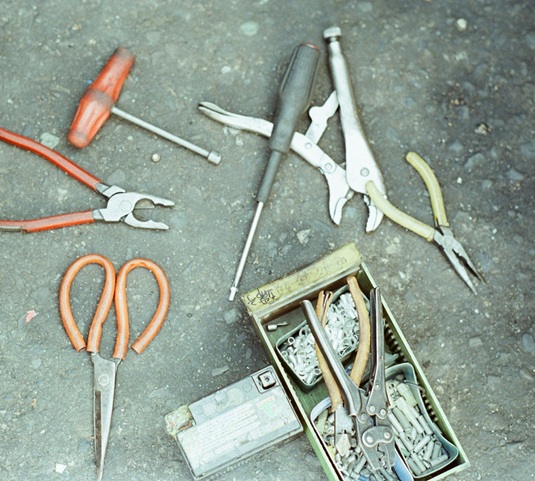
Injury Claims for Unsuitable or Makeshift Work Equipment
- Workers injured while using unsuitable or makeshift equipment may be able to claim compensation in England & Wales.
- Employers should provide safe, suitable tools and prevent staff from using improvised equipment that increases risk.
- A personal injury solicitor can assess negligence and help injured workers pursue a claim.
- Compensation can cover pain, suffering, lost earnings, medical treatment, and rehabilitation.
About Our Legal Expert: This content is produced with oversight by Michael Jefferies, Managing Director who has more than 30 years’ legal experience.
Written by Tanya Waterworth, Digital Content Writer
What Can Compensation Cover if Hurt Using Improvised Work Equipment?
If proper tools aren’t provided at work which sees an employee having to ‘make do’ with whatever’s available to get tasks done, what can compensation cover if hurt using improvised work equipment? This type of practice at work may seem resourceful but could be risky if an employee causes an accident, for example when boxes become a step stool or a wheeled chair becomes a ladder. However, when someone is injured because makeshift equipment was used, the employer may be found liable. This is because employers in England and Wales must adhere to strict health and safety regulations which includes providing proper tools in the workplace.
We look at how improvised equipment accidents differ from defective equipment and if you’ve been injured in a work accident where improvised tools were used, whether you may be entitled to make a personal injury claim for compensation.
Why Can Improvised Work Equipment Be Risky?
Improvised tools are not designed for the job. They lack stability, strength, and safety features, and they may often fail without warning. Workers typically resort to makeshift equipment because proper tools are missing, broken, or unavailable. This may signal deeper safety issues at the company where situations arise because the workplace has not been equipped or maintained properly.
Here are some examples of what can go wrong with improvised tools:
- Using a spoon as a screwdriver: may lead to slips, hand injuries, or sudden tool failure.
- Standing on cardboard boxes: can potentially cause falls, fractures, and back injuries.
- Securing a loose machine guard with duct tape: this may leave workers exposed to blades, moving parts, or entanglement hazards.
- Using a wheeled chair to reach a high shelf: a risky practice which could result in falls, head injuries, or sprains.
- Pushing a broom handle into machinery: this has potential to cause crush injuries, amputations, or severe lacerations.
When May An Employer Be Negligent?
In England & Wales, employers should adhere to guidelines under the Health and Safety at Work etc. Act 1974 and PUWER regulations to provide safe, suitable equipment and a working environment that minimises risk. Improvised tools almost always indicate a breach of this duty.
The Health and Safety Executive (HSE) highlights that equipment provided for use at work should be suitable ‘for the intended use, that it is safe for use and maintained in a safe condition’. If this doesn’t happen, you may find employees using makeshift tools simply to get the job done.
An employer may be negligent if:
- Proper tools were not provided, leaving workers no choice but to improvise.
- Equipment was broken, and the employer failed to repair or replace it.
- Workers were pressured to complete tasks quickly, encouraging unsafe improvisation.
- Risk assessments were not carried out, or hazards were ignored.
- Training was inadequate, leaving workers unsure of safe methods.
- Supervision was lacking, allowing unsafe practices to become routine.
- Machine guards or safety features were missing, damaged, or poorly maintained.
- Management knew improvised equipment was being used and failed to intervene.
How Improvised‑Equipment Accidents Differ from Defective‑Equipment Accidents
If you’ve been injured due to the use of improvised equipment, such a claim would centre on the employer’s failure to provide proper tools or to enforce working practices. An accident due to defective equipment focuses focuses on the condition of supplied equipment.
The distinction between using makeshift tools and defective equipment at work is important:
- Defective equipment refers to tools or machinery that are faulty, damaged, or poorly manufactured.
- Improvised equipment refers to objects never intended for the job — such as household items, makeshift supports, or temporary fixes.
Why You Should Speak to a Personal Injury Solicitor
If you were injured because you had to use makeshift equipment, speaking to a solicitor is one of the most important steps you can take. This is because a specialist in workplace injury claims can:
- Assess whether your employer breached their duty of care.
- Gather evidence, including witness statements, workplace policies, accident reports, and photographs.
- Identify systemic issues, such as repeated improvisation or lack of proper tools.
- Prove causation, showing how the improvised equipment directly led to your injury.
- Calculate your compensation, including financial losses and long‑term impact.
- Handle negotiations with insurers so you don’t have to.
- Ensure your claim complies with England & Wales legal requirements, including limitation periods.
We partner with personal injury solicitors who are experienced in work injuries. They offer a free, initial consultation to assess whether you have a valid claim, as well as No Win, No Fee agreements.
It’s also important to note that there’s a three-year limit from the date of injury, or from when you became aware of the injury, to make a claim for compensation.
What Can Compensation Cover?
As each case is unique, your solicitor should be able to provide an estimate for your specific claim. The value of your claim is calculated on the severity of the injury and the impact on your life.
Generally if your claim succeeds, compensation may include:
- Pain, suffering, and loss of amenity
- Lost earnings, including future income if your injury affects your ability to work
- Medical treatment, physiotherapy, and rehabilitation
- Travel costs for appointments
- Care and assistance, even from family members
- Special damages, such as mobility aids or home adjustments
Your Next Steps After an Improvised‑Equipment Accident
If you’ve been injured at work because you had to use unsuitable or makeshift equipment, take these steps as soon as possible:
- Report the accident to your employer and ensure it’s recorded in the accident book.
- Seek medical attention, even if your injuries seem minor. This is because medical records are crucial evidence for a claim.
- Take photographs of the improvised equipment, the work area, and any hazards.
- Collect witness details from colleagues who saw what happened.
- Keep receipts for medical costs, travel, or other expenses.
- Avoid discussing fault with your employer or colleagues and let your solicitor handle the legal aspects and who will focus on getting you the compensation you deserve.
How We Can Help
Improvised tools being used at work may be a sign that something has gone wrong in the workplace. Therefore, if you’ve suffered an injury because proper equipment wasn’t provided, our team can guide you through the process of claiming compensation.
For your free consultation and to get started:
📞 Call us now at 0330 818 0349
💻 Or visit our Contact Us page