
1
Contact or call for free on 0333 358 3034

2
Talk through the details of your claim. Just so you know, we're FCA regulated.

3
Find out if you could claim & speak to a real person.

4
Secure the compensation you deserve

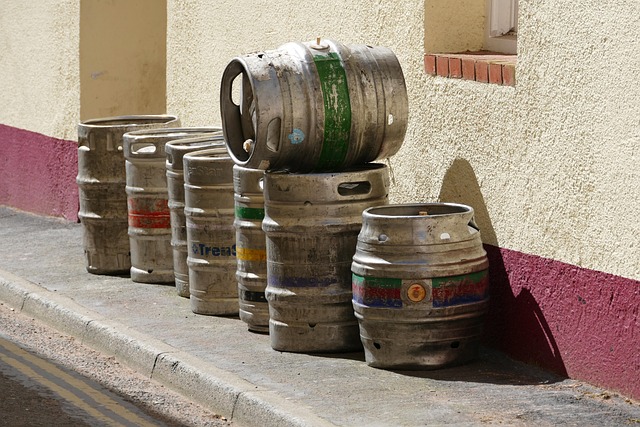
Keg Handling Injury At Work?
Written by Tanya Waterworth, Digital Content Writer
About Our Legal Expert: This content is produced with oversight by Michael Jefferies, Managing Director who has over 30 years’ legal experience.
Claim Compensation for Poor Training
If you’ve suffered from a keg handling injury at work, inadequate manual handling training may be the reason it happened. Kegs are heavy and awkward. When something goes wrong while moving them, the injuries may be immediate and severe. In pubs, bars, breweries, stadium venues, festivals, and wholesale depots, keg handling is a daily task. However, many employers still fail to provide proper manual handling training specific to kegs.
If you’ve suffered a keg-related injury at work which may have resulted from inadequate manual handling training in England and Wales, you may be able to bring a personal injury claim for compensation.
Why kegs can cause workplace injuries
A full keg commonly weighs around 50–60kg depending on size and contents. That’s generally beyond what most people can safely lift. This is especially in poor conditions such as a slippery or uneven floor. Kegs also present hazards that make them different from “standard” manual handling:
- Their shape makes them hard to grip
- They roll unexpectedly when placed on uneven ground
- They shift weight when tilted or moved quickly
- They are often handled in confined spaces like cellars
- Floors are frequently wet, sloped, or poorly lit
Keg handling is not just “lifting something heavy.” It involves rolling, tipping, lowering, stacking, and manoeuvring in awkward positions. Without proper training and a safe system of work, injuries are likely.
What counts as inadequate manual handling training for keg work?
Employers often claim they gave “manual handling training,” but in keg injury cases it may be that the training provided was too generic to be useful. Keg-specific training should cover how to move kegs safely in real working conditions.
Examples of inadequate manual handling training may include:
- No training at all for new starters or temporary staff
- Training that is out of date or never refreshed
- Generic training that doesn’t cover kegs, cellars, ramps, or tight storage areas
- No practical instruction on rolling, guiding, or lowering kegs
- No instruction on using keg trolleys, cellar hoists, or lifts
- No training on team lifting procedures (and when not to attempt it)
- No training on dealing with wet floors, uneven surfaces, or stairs
If you were expected to “just get on with it” or copy what others were doing, that’s a red flag. Keg handling is a high-risk manual handling task and training must reflect that reality.
How poor training leads to keg injuries
Keg injuries happen fast and often before the worker even realises the lift is unsafe.
Common training-related keg injury scenarios may include:
1. Lifting or dragging kegs without being shown safer methods
Workers often try to lift the keg rather than roll it. Without training, people attempt unsafe movements such as twisting while lifting, dragging with a rounded back, or dropping the keg down a step.
2. Mishandling kegs on cellar steps
Cellar stairs are a major hazard. If you haven’t been trained to use a controlled technique (or given equipment), the risk of back injury or crushing injuries increases dramatically.
3. Poor technique when stacking or unstacking
Kegs stored in stacks can shift unexpectedly. Training should cover how to position hands, control movement, and avoid placing fingers where they can be trapped.
4. Lack of guidance on team handling
Some employers treat team lifting as the solution, but two people lifting a 60kg keg in a cramped cellar can be just as risky. Workers need clear instruction on communication, timing, and when to stop.
5. No instruction on using equipment properly
Keg trolleys, dollies, pallet trucks, and cellar lifts reduce risk, but only when used correctly. If nobody trained you on safe use, the employer may still be at fault even if equipment existed.
Typical injuries in keg handling claims
Keg injuries are often serious because the load is heavy and movement is unpredictable. Many workers also push through pain at first, which can worsen the damage.
In keg injury compensation claims, common injuries can include:
- Lower back strain and soft tissue injuries
- Slipped discs and sciatica
- Shoulder injuries (including rotator cuff tears)
- Hernias
- Knee injuries from twisting or sudden load transfer
- Crushed fingers and hand fractures
- Foot fractures and crush injuries from dropped kegs
- Head injuries from falling kegs in storage areas
A keg injury can take someone out of work for weeks, or even permanently limit their ability to do physical roles in pubs, logistics, or brewing.
Employer duties for keg handling in England and Wales
Keg injury claims often succeed because employers have clear legal responsibilities when workers handle heavy loads.
In England and Wales, employers must take reasonable steps to prevent manual handling injuries. For keg work, that typically means they should assess the risk of keg moving tasks and provide adequate training and supervision. Risk can also be reduced with proper safety equipment and safety systems in place.
If an employer fails to do these things, and that failure causes an injury, a compensation claim may follow.
Importantly, employers cannot rely on workers “being strong” or “having done it before.” Kegs remain hazardous regardless of experience.
Who is most at risk of inadequate training?
Keg injury claims frequently involve:
- New starters in pubs and bars
- Agency workers in distribution depots
- Festival and event staff working temporary shifts
- Hospitality workers asked to cover cellar duties without training
- Young workers expected to do heavy work immediately
- Staff working alone in cellars during deliveries
Training gaps often appear when staffing is stretched. In some workplaces, a manager simply tells someone to “get the kegs down” with no instruction, no equipment, and no supervision.
What evidence supports a keg injury claim based on poor training?
The strongest keg injury claims are built on practical evidence showing what training you did – or didn’t – receive.
Useful evidence includes:
- Accident book entries mentioning kegs, cellars, or deliveries
- Incident reports or internal emails
- Training records (or the lack of them)
- Witness statements from colleagues who also lacked training
- Photos of the cellar, steps, floor conditions, and storage layout
- CCTV footage from loading bays or cellar entrances
- Risk assessments for keg handling tasks
- Equipment logs showing no trolley/hoist was available or maintained
- Medical records and physiotherapy notes linking the injury to the incident
If you were never asked to sign training paperwork, that often becomes important. Employers sometimes produce “generic” training certificates after an accident, but those don’t necessarily prove you were trained properly for keg work.
Time limits for keg injury compensation claims
In most cases in England and Wales, you have three years to start a personal injury claim. The time limit usually runs from the date of the keg injury.
It’s advisable to start your caim as early as possible after the accident. Training records, CCTV, and witnesses can disappear quickly, especially in hospitality roles with high staff turnover.
What compensation can cover in keg injury cases?
Compensation in keg injury claims is not only about the injury itself. It also covers how the injury affects your life and income.
Depending on the severity, a claim may include:
- Pain, suffering, and loss of amenity
- Loss of earnings (including overtime and tips where evidenced)
- Future loss of earnings if you can’t return to manual work
- Physiotherapy, scans, and private treatment costs
- Travel expenses to appointments
- Care and assistance from family during recovery
Keg injuries often involve back and shoulder damage, which can affect work for months. Your personal injury lawyer will be able to provide an estimate regarding your specific claim if you were injured moving a keg at work.
Next steps if you’ve suffered a keg injury at work
If you were injured moving kegs and you suspect training was inadequate, start by writing down exactly what happened while it’s still fresh. Note the weight of the keg, the conditions (wet floor, steps, poor lighting), whether you were alone, and what you were told to do.
It’s crucial to seek legal advice to have your potential claim assessed by expert lawyers. Workplace injury claims can be complex. Your lawyer will help you to gather evidence and negotiate the best compensation settlement for you.
We partner with lawyers who work on a ‘No Win, No Fee’ basis and we can guide you through making a claim.
To discuss your potential claim in confidence, contact our friendly team on 0333 358 3034. Alternatively, complete our online contact form to arrange a free, no-obligation consultation.