
1
Contact or call for free on 0333 358 3034

2
Talk through the details of your claim. Just so you know, we're FCA regulated.

3
Find out if you could claim & speak to a real person.

4
Secure the compensation you deserve

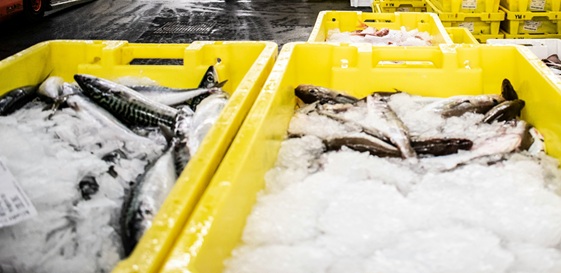
Compensation If Injured Working in a Fish Processing Factory
About Our Legal Expert: This content is produced with oversight by Michael Jefferies, Managing Director who has over 30 years’ legal experience.
Written by Tanya Waterworth, Digital Content Writer
Unsafe Equipment & Accidents on Large Industrial Plants
Working in the fish industry often involves fast-paced production lines and accidents involving unsafe machinery which may result in compensation if injured while working in a fish processing factory. Our own data analysis of callers with possible claims has indicated that machinery which is not properly maintained is a primary cause of work injuries.
A combination of high production demands, heavy machinery and even slippery floors, creates potential hazards. So, if this has happened to you or a loved one while at work, you may be able to pursue a personal injury claim for compensation if employer negligence has played a role.
We explain below the claims process, what evidence may be needed and why proper maintenance of large industrial equipment is vital in preventing accidents.
Why Fish Processing Factories May Have Higher Accident Risks
Fish processing plants across the UK rely on large industrial machinery, conveyor belts, cutting equipment, refrigerated systems, and automated packaging lines. With such onsite risks, employers are required to implement strict safety measures, including under the Health and Safety at Work etc. Act 1974, the Provision and Use of Work Equipment Regulations (PUWER), and the Management of Health and Safety at Work Regulations 1999.
If employers fail to maintain this equipment or ignore safety protocols, workers can face increased hazards, such as:
- Lacerations from poorly maintained cutting tools
- Crush injuries from defective conveyor systems
- Slips and falls on wet or icy floors
- Manual handling injuries from lifting heavy crates
- Chemical burns from cleaning agents
- Cold‑related injuries in chilled environments
Real Life Example Of An Injury At A Fish Processing Company
The Health and Safety Executive (HSE) recently highlighted an incident at a fish processing company in Lerwick where an employee suffered from severe injuries. The employee was clearing a blockage when a machine restarted. He was struck repeatedly suffering from life threatening injuries, including fractured ribs, pelvis, clavicle and scapula as well as collapsed lungs.
The HSE investigation found that an interlocking safety gate had been damaged in 2024, which had made the locking mechanism difficult to open. As a result, the employee removed a panel and entered the machine area, triggering a sensor which restarted the machine as he walked along the stationary conveyor
An HSE Inspector said, “Interlocking guards exist for one reason: to stop people reaching dangerous machinery while it’s still live. When that gate was damaged, it should have been repaired properly and its integrity restored immediately, not left in a state where a determined employee could simply lift out a panel and walk into a hazardous area.”
The Importance of Maintenance on Large Industrial Plant Equipment
Proper maintenance is one of the most critical safety requirements in fish processing factories. When machinery is not serviced, inspected, or repaired on time, it can malfunction and cause serious injuries. We gathered our own call data over a three month period about work injuries which indicated that poorly maintained machinery or equipment was one of the strongest recurring themes in our findings.
Common maintenance‑related failures include:
- Conveyor belts that jam or restart unexpectedly
- Blades that become unstable or misaligned
- Faulty emergency stop buttons
- Refrigeration units leaking chemicals
- Crates or pallets collapsing due to wear and tear
Key Tip: If your injury resulted from poorly maintained equipment, this may be strong evidence of employer negligence as employers must ensure machinery is safe, regularly inspected, and compliant with PUWER.
When Can You Make a Personal Injury Claim?
Here is the key criteria around employer negligence if you want to pursue a personal injury claim:
- Your accident happened within the last three years
- You were owed a duty of care by your employer
- Your employer breached that duty
- You suffered physical or psychological injury as a result
How to Make a Personal Injury Claim After an Accident in a Fish Processing Factory
1. Report the Accident Immediately
Tell your supervisor or manager and ensure the incident is recorded in the company accident book. If there is no accident book, send an email to that you have a written record which supports your claim.
2. Seek Medical Attention
Visit A&E, your GP, or an urgent care centre. Medical records often lay the foundation in showing the extent of your injuries.
3. Gather Evidence
Good evidence can significantly improve your chances of success. Useful items include:
- Photos of the accident scene
- Photos of faulty machinery
- CCTV footage
- Witness statements
- Maintenance logs
- Training records
- PPE provided (or lack of it)
Key Tip: If your injury was caused by poorly maintained equipment, maintenance logs and real-time CCTV footage can be particularly strong evidence for your claim.
4. Keep Records of Financial Losses
Compensation can cover more than just physical injury. Keep receipts and records for:
- Lost earnings
- Travel costs
- Medical expenses
- Rehabilitation costs
- Prescription charges
5. Speak to a Personal Injury Solicitor
We partner with solicitors specialising in workplace accidents in England and Wales. They can assess your case in a free, initial consultation, gather evidence, and negotiate compensation on your behalf. They also offer a No Win, No Fee option, making the process accessible and risk‑free.
What Does Compensation Typically Cover?
The amount you receive depends on the severity of your injury, the length of your recovery period and whether there are any long-term impacts. A successful personal injury claim may include compensation for:
- General damages for pain, suffering, and loss of amenity
- Special damages for financial losses such as lost wages
- Future losses if your injury affects your long‑term ability to work
- Medical and rehabilitation costs
- Travel expenses
- Care costs, if needed
How Does Speaking to a Solicitor Strengthen Your Claim?
Fish processing factories often have complex machinery, multiple safety protocols, and strict production schedules. An experienced solicitor can understand how industrial plant equipment should be maintained and can:
- Identify breaches in maintenance and safety procedures
- Request maintenance logs and inspection reports
- Obtain CCTV footage
- Interview witnesses
- Build a strong case proving employer negligence
- Ensure you receive the maximum compensation available
Guide For Employees Injured at Fish Processing Factories
Our guidance applies to workers injured in fish processing factories across the UK, including major processing hubs such as:
- Grimsby
- Hull
- Fleetwood
- Aberdeen
- Milford Haven
- Cornwall
- North Shields
Top 6 FAQs About Fish Processing Factory Injury Claims
1. What evidence do I need?
Photos, CCTV, witness statements, accident book entries, medical records, and maintenance logs.
2. How long do I have to claim?
Three years from the date of the accident.
3. Does No Win, No Fee apply?
Our partner workplace injury solicitors offer No Win, No Fee agreements, which means you do not have to pay any fees upfront and only pay a capped amount if you win your claim for compensation.
4. Can I claim if the machinery hadn’t been serviced properly?
Yes, unsafe industrial plant equipment which has not been properly maintained is a clear breach of employer duty and often strengthens your claim.
5.What if my employer says the accident was unavoidable?
You can still claim. A solicitor can review safety procedures, maintenance logs, and training records to determine whether negligence played a role.
6. Do I need to prove my employer was negligent?
Your solicitor will handle this. Evidence such as faulty machinery, unsafe conditions, or lack of PPE can demonstrate negligence.
How To Start?
if you do suffer an injury at a fish processing company through no fault of yours, act quickly, gather evidence, and seek legal advice to claim compensation to help you through a difficult time.
Our friendly team can guide you through a potential claim. Call us today at 0333 358 3034 or visit our contact page to discuss your potential claim.